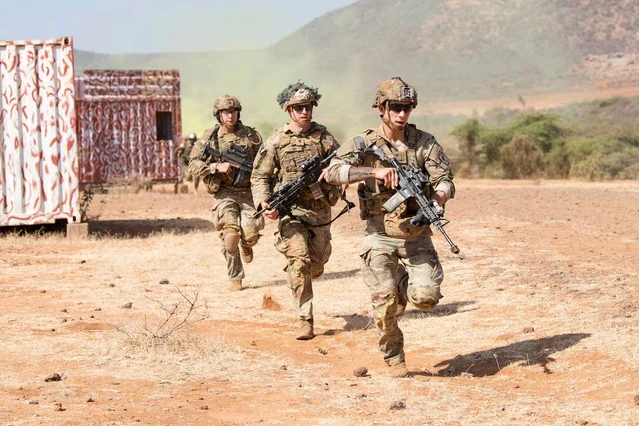
React to Indirect Fire
Mortars and artillery are observed and adjusted, so the impact area is the one place you cannot stay. Hit the deck for the first rounds, take the leader's direction and distance, and clear the beaten zone fast. Here is the drill, step by step, the way it runs on the ground.
Interactive Walkthrough
Hit play and watch the drill unfold from above, or step through it at your own pace. Gold is A Team, blue is B Team, white is the squad leader, red is the enemy. Every movement on the map matches the written steps below.
The Ranger Handbook (TC 3-21.76) is the source for every drill on this page — mandatory kit for any military leader.
Don’t Miss the Next Drill
More patrolling and battle drill pages are being built right now, animated the same way. Subscribe and I’ll let you know the moment new tactics, articles, and gear reviews go live.
Task · Conditions · Standards
React to indirect fire: on the alert “INCOMING,” soldiers immediately take cover, then move rapidly in a leader-directed direction and distance out of the impact area to a rally point, and report the contact to higher.
The squad is moving and conducting operations when any soldier gives the alert “INCOMING,” or a round impacts nearby.
Soldiers immediately seek the best available cover; the unit moves out of the impact area to a designated rally point in the direction and distance ordered after the impacts; unit leaders report the contact to higher headquarters.
The Full Sequence
Squads that walk this drill on a terrain model before stepping off run it clean the first time live — build the objective, talk every phase.
Comms & Reports
The Alert
One word, from anyone, instantly:
- “INCOMING!” — loud, repeated down the squad
- No waiting for confirmation — first warning is the only warning
- Point the direction of the incoming if known
Immediate Action
What every soldier does without an order:
- Prone or nearest cover during the impacts
- Defeat fragmentation — get low, get small
- Stay off your feet while rounds are landing
The Move Order
The leader’s call that gets the squad out:
- Direction — clock direction or azimuth
- Distance — how far to clear the beaten zone
- Rally point — where to link up
- Accountability — team leaders count their men before the move: "A Team up, four!"
When to Move
Timing the bound out of the beaten zone:
- Cover during the impacts
- Move rapidly as the impacts pause
- Stay dispersed — never bunch into one round
Shelling Report — to Higher
So counter-fire and higher can answer it:
- Direction the fire came from
- Location / your grid · time
- Type of fire and effect — casualties, area
At the Rally Point
Re-cock the squad after the impacts:
- 360 with the SL in the middle, then re-confirm the count
- ACE · treat casualties · evac priority
- Reorganize and continue the mission
SALUTE, ACE, and every report above gets written, not memorized — in the all-weather leader book that’s standard issue for a reason.
Where Squads Fail This Drill
Standing Up or Running During the Volley
Fragmentation sprays out and up — a soldier upright in the beaten zone while rounds are landing is the most exposed target on the field. Get prone or into cover for the initial impacts, then move.
Bunching Up
Indirect fire turns a clustered squad into a single mass-casualty target. Disperse on the move and stay dispersed through the rally point — one round should never be able to reach two soldiers.
Moving With No Direction or Distance
Without a clear direction, distance, and rally point, the squad scatters in three directions out of the beaten zone and fragments. The leader’s order has to answer all three.
Staying in the Impact Area
Indirect fire is observed and adjusted — the second volley walks onto where the first one landed. The impact area is the one piece of ground you must leave, and leave fast.
Moving the Wrong Way
Moving toward the observer, into more impacts, or across the gun-target line wastes the bound. Move out of the beaten zone on the leader’s azimuth, not toward the noise.
Not Reporting the Direction of Fire
Higher and the supporting guns can’t answer indirect fire they don’t know about. Report the direction of the incoming and the situation so it can be suppressed or counter-fired.